Sheila Eileen Dwight and Elton John: A Private Life with a Profound Public Legacy

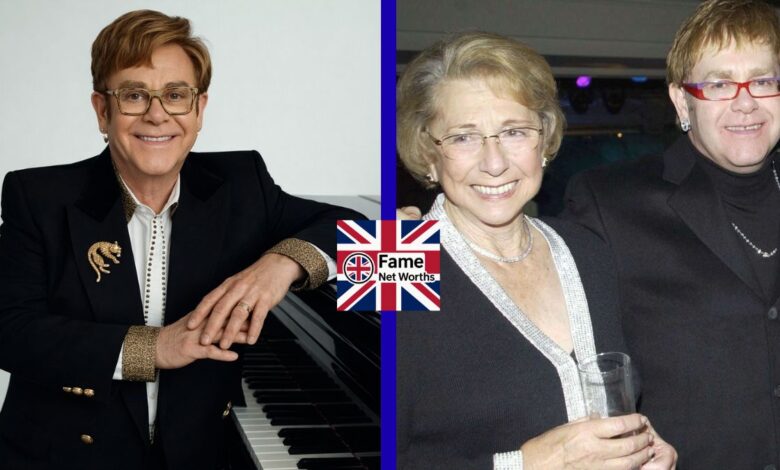
The global fame of Elton John—his chart-topping records, flamboyant stage persona, and decades-long career—has often drawn attention away from the quieter figures who shaped his early life. One of the most influential among them was his mother, Sheila Eileen Dwight (later Farebrother). Unlike her son, Sheila never sought the spotlight. Yet her presence looms large in any serious understanding of Elton John’s musical beginnings and emotional development.
This article explores Sheila Eileen Dwight not as a celebrity adjunct but as a private individual whose tastes, values, and choices left a lasting imprint on one of the world’s most recognizable musicians. Because she was not a public figure in her own right, the historical record is necessarily selective. Rather than filling gaps with speculation, this account focuses on verifiable facts and careful analysis—examining how privacy, family dynamics, and cultural context shaped her role in Elton John’s story.
Quick Bio
| Key Detail | Information |
|---|---|
| Full Name | Sheila Eileen Harris Dwight Farebrother |
| Relationship | Mother of Elton John |
| Public Profile | Private individual |
| Born | 1925 |
| Died | December 4, 2017 (aged 92) |
| Parents | Frederick George Harris, Ivy White |
| Marriages | Stanley Dwight (m. 1945, divorced); Fred Farebrother (m. 1962) |
| Children | Sir Elton John (Reginald Kenneth Dwight) |
| Known Interests | Popular music and records |
| Social Media | None (private individual) |
Who Is Sheila Eileen Dwight?
Sheila Eileen Dwight was best known publicly as the mother of Elton John, but her importance goes well beyond a genealogical footnote. She was a working-class British woman whose enthusiasm for contemporary music exposed her son to sounds that were unusual in many English households of the 1950s. While professional mentors and collaborators would shape Elton’s later career, his earliest musical curiosity was nurtured at home—often through his mother’s record player.
Sheila’s significance lies in this formative role. She encouraged musical exploration while navigating a complex family life that included divorce and remarriage, circumstances still socially sensitive in mid-20th-century Britain. Her life demonstrates how cultural influence does not require fame; sometimes it begins quietly, through everyday choices and passions.
The Private Life of Sheila Eileen Dwight
Sheila Eileen Dwight lived largely outside public view. Even after her son achieved international fame, she remained grounded in ordinary domestic life. This deliberate privacy is itself revealing. Many parents of celebrities become public figures by association, yet Sheila chose a different path. Her absence from the public eye suggests a strong sense of personal boundaries and a preference for authenticity over attention.
From a biographical standpoint, this privacy limits available detail—but it also underscores her character. The consistency with which she avoided the spotlight mirrors a generational attitude in which family support was offered quietly, without expectation of recognition. Her influence, therefore, must be understood through outcomes rather than self-promotion.
Early Life and Background of Sheila Eileen Dwight
Born in 1925 to Frederick George Harris and Ivy White, Sheila came of age during a period marked by economic hardship and social change in Britain. Music, particularly American rock ’n’ roll and pop, offered a form of cultural escape. By the time she was raising her son, she had developed a deep affection for contemporary records—an interest that would later prove pivotal.
While specific details of her education and early employment remain private, her musical taste is well documented. Artists such as Elvis Presley and Bill Haley were staples in her collection. In a Britain still dominated by traditional pop and classical music, this exposure was both modern and influential.
Marriage and Family Context
Sheila married Stanley Dwight in 1945, shortly after World War II. Their marriage produced one child, Reginald Kenneth Dwight—later Elton John—but ultimately ended in divorce. Sheila later married Fred Farebrother in 1962, a union that brought greater stability to her household.
These transitions mattered. Elton John has spoken openly about emotional tensions within his family, particularly regarding his father’s distance. Against that backdrop, Sheila’s role as a constant presence becomes more significant. Her household was not simply a place of upbringing; it was the environment in which music became a source of identity and emotional expression.
Sheila Eileen Dwight’s Role Behind the Scenes
Sheila’s influence was not managerial or strategic, but cultural and emotional. She did not guide her son’s career decisions or public image. Instead, she shaped his sensibility. By allowing records to dominate the living room and encouraging curiosity rather than restraint, she normalized music as a serious interest rather than a hobby.
This kind of behind-the-scenes influence is often overlooked, yet it is foundational. Many successful musicians trace their beginnings to a parent who valued music enough to make it part of daily life. Sheila’s role fits squarely within this tradition—subtle, consistent, and powerful.
Family Life: Raising the Next Generation
Raising a child with exceptional musical talent requires both patience and openness. Sheila Eileen Dwight appears to have offered both. While her relationship with Elton John was not without conflict—periods of estrangement are well documented—there remained an underlying bond rooted in shared history and affection.
Her parenting reflects the complexities of real family life rather than an idealized narrative. Support and disagreement coexisted. Over time, this dynamic contributed to Elton’s emotional depth as an artist, a quality evident in his songwriting and public vulnerability.
Philanthropy and Community Values
Sheila herself was not publicly associated with philanthropic causes, but her son’s later activism and generosity offer indirect insight into family values. Elton John’s extensive charitable work suggests an upbringing that emphasized empathy and social responsibility. While this cannot be attributed to any single influence, family culture plays a role in shaping such priorities.
In this sense, Sheila’s legacy extends beyond music. It includes the transmission of values that later found expression in public service and advocacy.
The Power of Privacy: Influence Without Publicity
Sheila Eileen Dwight’s life illustrates how privacy can coexist with influence. By staying out of the limelight, she allowed her son’s career to stand on its own while maintaining her own sense of self. This choice challenges the assumption that proximity to fame automatically leads to visibility.
Her portrayal in Rocketman, played by Bryce Dallas Howard, brought renewed attention to her character—but even this cinematic depiction emphasized complexity rather than celebrity.
Public Curiosity and Misconceptions About Sheila Eileen Dwight
Public interest in Sheila often gravitates toward moments of conflict rather than contribution. This focus can obscure the broader picture: a mother who introduced her son to music, supported his talent, and remained a formative presence despite personal differences.
Misconceptions arise when private individuals are viewed only through the lens of a famous relative. A balanced account recognizes both tension and influence, without reducing a life to headlines.
Conclusion
Sheila Eileen Dwight passed away on December 4, 2017, at the age of 92. Following her death, Elton John shared heartfelt tributes, acknowledging her role in his life and musical journey. Her legacy is not one of public accolades but of cultural transmission—a reminder that great careers often begin in ordinary rooms, with ordinary people who happen to love music.
Read this too:Crip Mac Net Worth: Fame, Virality, and the Reality Behind the Numbers
(FAQs)
1. Who was Sheila Eileen Dwight?
She was the mother of Elton John and a key influence on his early musical interests.
2. When was Sheila Eileen Dwight born?
She was born in 1925.
3. How did she influence Elton John’s music?
Through her extensive record collection and enthusiasm for pop and rock music.
4. Was she a public figure?
No, she lived as a private individual.
5. Who portrayed her in Rocketman?
Bryce Dallas Howard.
6. Did Sheila Eileen Dwight support Elton John’s career?
Yes, particularly in his early years, though their relationship was complex.
7. When did she pass away?
December 4, 2017.
8. What is her lasting legacy?
Her influence on Elton John’s musical foundation and emotional development.